
The Ultimate Guide to Visapur Fort Trek: The “Waterfall Staircase” Experience
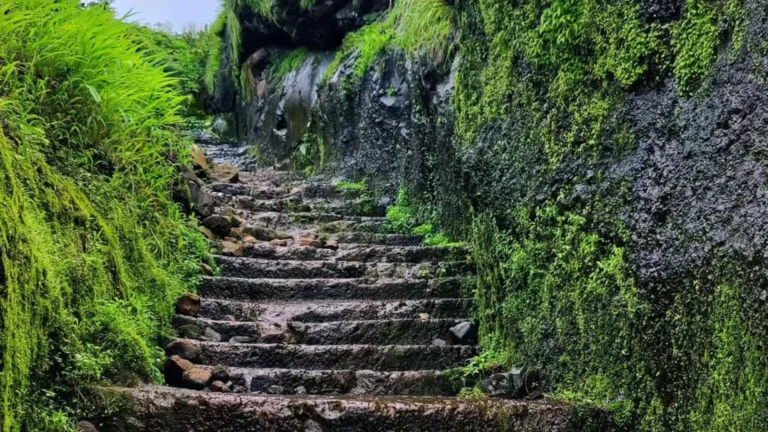
If you are looking for a trek in Mumbai region that combines raw natural beauty with a thrilling water adventure, the Visapur Fort trek is your best bet. Often called the twin of the famous Lohagad Fort, Visapur is actually higher, larger, and arguably more exciting during the rains. It is home to the legendary “waterfall staircase,” where you literally climb up a flight of stone steps as water gushes down over them.
As a local trekking guide, I always tell my groups that if Lohagad is for the history buffs, Visapur is for the adventure seekers. It is a premier fort near Mumbai for trekking that offers a massive plateau to explore, ancient caves, and views that will make you forget the city noise in an instant.
1. Introduction & Trek Overview
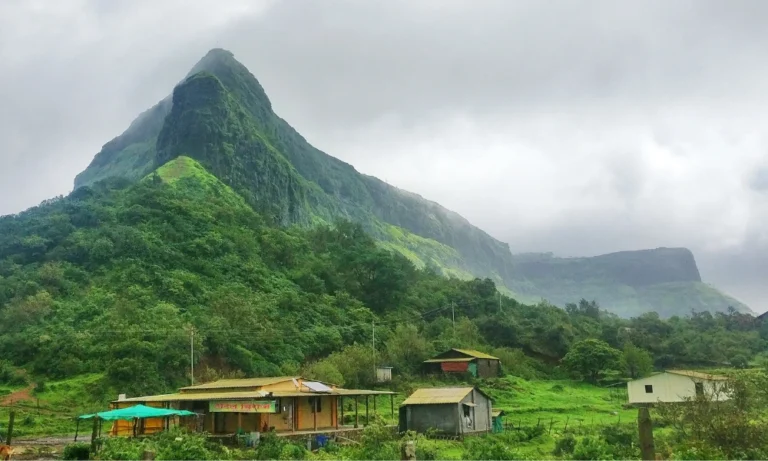
Visapur Fort is a majestic hill fortress located near the village of Visapur in the Maval Taluka. It stands at a towering visapur fort height of 1,084 meters (3,556 feet) above sea level, making it significantly higher than its neighbor, Lohagad. This makes it a popular choice for trekking near mumbai because the elevation provides a superior vantage point over the entire Indrayani and Pavana river basins.
What makes this a top one day trek near mumbai is the variety of the trail. You start through lush forest patches, cross rocky terrain, and eventually reach a massive summit plateau that feels like a hidden world. It is a quintessential mumbai trek place that perfectly captures the spirit of the Sahyadris.
2. Why This Trek Is Famous
Visapur has several “claims to fame” that draw thousands of trekkers every year:
- The Waterfall Staircase: During the monsoon, the main entrance steps turn into a cascading waterfall. Climbing up through this flowing water is a unique experience found in very few trekking near mumbai spots.
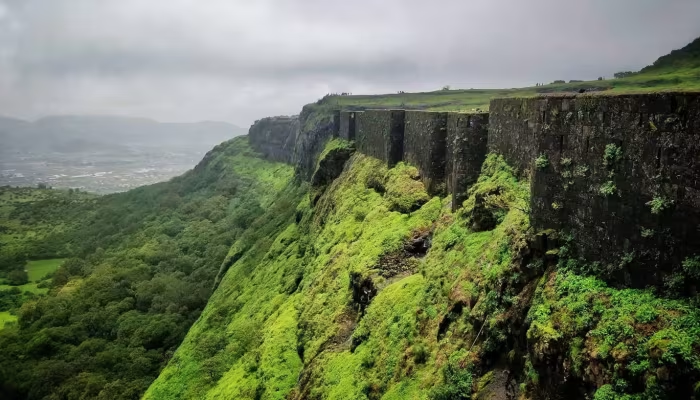
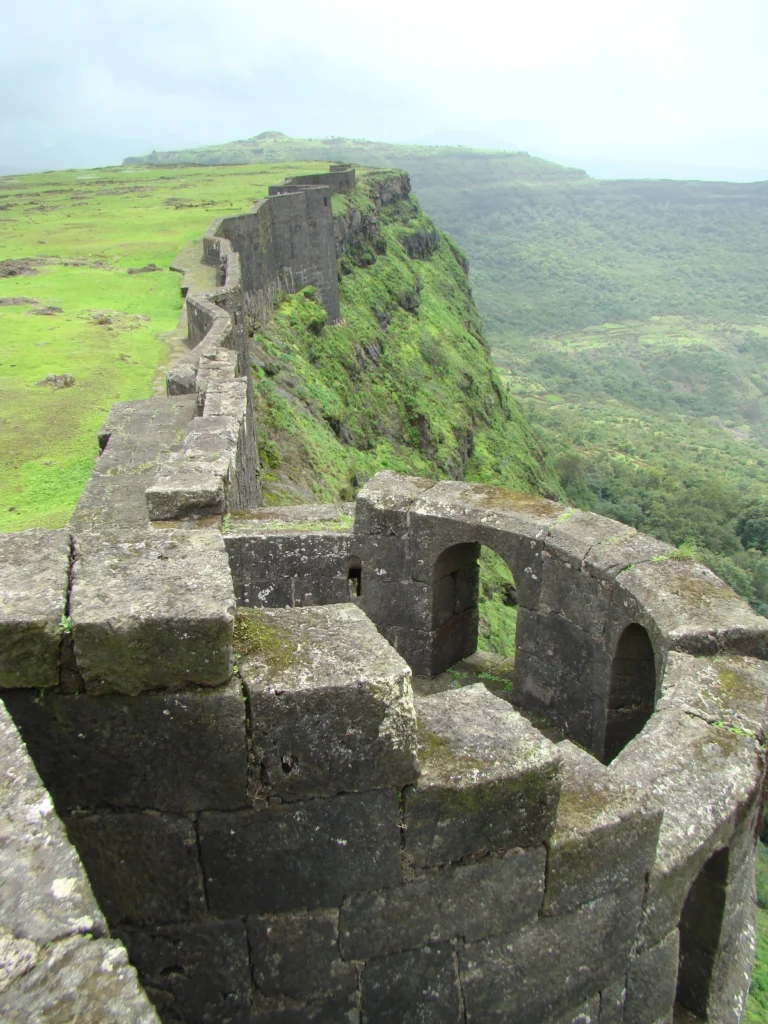
- Massive Fortification Walls: The fort is famous for its long, continuous stone walls that are still remarkably intact. Walking along these walls gives you a sense of the scale of ancient Maratha engineering.
- Twin Fort Connection: Because it is so close to Lohagad, it offers the best possible view of its “twin,” looking down upon it from a higher altitude.
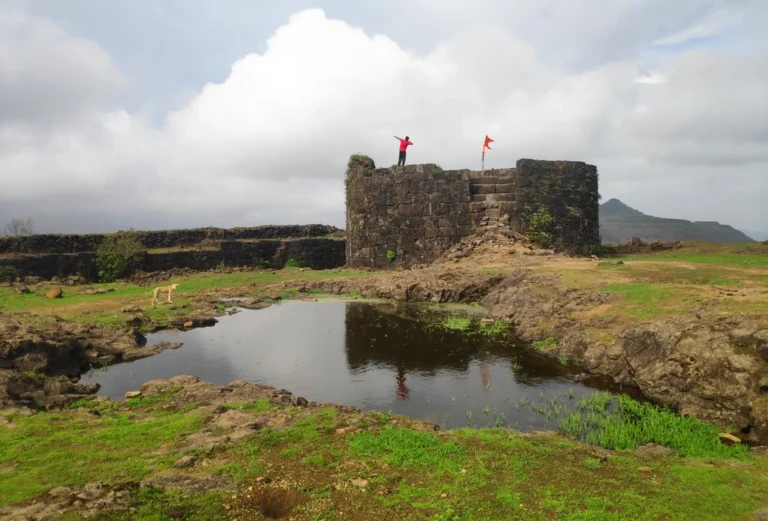
- Plateau Exploration: The top is a vast, flat land with several ruins, ponds, and even a large stone-built house (Peshwa’s Palace) that tells tales of its royal past.
3. History & Background
Visapur Fort was built in the early 18th century (roughly between 1713–1720 CE) by Balaji Vishwanath, the first Peshwa of the Maratha Empire. Unlike many older forts that were built by the Satavahanas or Yadavas, Visapur was specifically designed to strengthen the defenses of the nearby Lohagad Fort.
Its history is tied to the Anglo-Maratha wars. In 1818, British forces realized that Visapur’s height was a tactical advantage. They occupied Visapur and used it to place their cannons, bombarding Lohagad from above and forcing its surrender. Today, you can still see iron cannons and the ruins of the Peshwa’s palace, marking its time as a strategic military outpost.
4. Trek Route & Trail Details
There are three main routes to conquer this fort near mumbai for one day trekking:
- Bhaje Village Route (Most Popular): This route starts near the famous Bhaja Caves. It is a scenic trail that passes through forests and eventually joins the “waterfall staircase.” Most beginners and commercial groups prefer this path.
- Lohagadwadi Route (Shortest): If you are already at the Lohagad base, a small path leads toward Visapur. This is the shortest way up but can be very crowded.
- Patan Village Route (The Quiet Path): For those who prefer solitude, the Patan village trail is steeper and more rugged. It offers a more “raw” trekking experience through the woods.
The final climb for all routes usually involves the stone steps. During the monsoon, these are wet and slippery, requiring careful foot placement.
5. Trek Difficulty Level
- Difficulty: Moderate.
- Suitability: It is considered an easy trek near Mumbai for regular hikers, but for absolute beginners, the “waterfall” section can feel a bit challenging.
- Physical Fitness: You need a decent level of stamina. The climb is a bit more demanding than Lohagad because of the height and the rocky nature of the steps.
6. Trek Distance & Duration
- Total Trekking Distance: Approximately 5–6 km (round trip).
- Time to Reach the Top: 2 to 2.5 hours.
- Return Time: 1.5 to 2 hours.
Most people spend at least 1–2 hours at the top because the plateau is huge and has a lot of hidden corners to explore.
7. How to Reach the Trek Base
Reaching this best place for trekking in mumbai region is easy:
- By Local Train: Take a central line train to Lonavala, then catch a local shuttle to Malavli Station. From Malavli, it is a 3 km walk or a short shared auto ride to Bhaje village.
- By Road: Drive on the Mumbai-Pune Expressway and take the Lonavala/Karla exit. Follow the signs for Bhaja Caves. Parking is available at the base village.
- By Bus: Take an ST bus to Lonavala and then use local transport (rickshaw or local bus) to reach Malavli/Bhaje.
8. Entry Fees, Permissions & Timings
- Entry Fees: A small fee is usually collected by the local villagers or at the sanctuary entrance for maintenance.
- Permissions: No prior forest department permission is currently needed for the standard routes.
- Timings: It is best to start your trek by 8:00 AM. Accessing the fort after dark is not recommended and often restricted for safety.
9. Best Time to Do This Trek
- Monsoon (June to September): The absolute best time. This is when you see the “waterfall staircase” in full glory. The surroundings are a deep, misty green.
- Winter (October to February): Great for exploring the ruins without the rain. The weather is cool, and the views of Pavana Lake are crystal clear.
- Summer (March to May): Not recommended during the day as the plateau offers zero shade and can get very hot.
10. Things to See During the Trek
- The Waterfall Steps: The highlight of the visapur fort trek.
- Peshwa Palace Ruins: Large stone structures that once housed the Maratha administrators.
- Hanuman Carving: A massive, beautifully carved image of Lord Hanuman on the fort walls.
- Ancient Water Tanks: Huge cisterns that still store rainwater.
- Ganesh Darwaja: One of the main remaining gateways with intricate carvings.
11. Things to Do Near the Trek Location
- Lohagad Fort: You can actually do both forts in one day if you start very early (6:00 AM).
- Bhaja Caves: Visit these 2nd-century BC Buddhist caves right at the base.
- Karla Caves: Located just a few kilometers away across the highway.
- Pavana Lake Camping: Many trekkers spend the night camping by the lake after the trek.
12. Safety Risks & Dangerous Areas
- Slippery Steps: The “waterfall” steps are the most dangerous part. Moss and flowing water make them very slick.
- Steep Cliffs: The edges of the Visapur plateau are not fenced. Stay away from the rim, especially in heavy fog when visibility is low.
- Dehydration: Because the top is a vast open plateau, you can get dehydrated quickly during the winter or summer.
- Bees: Like many forts in the region, be wary of beehives on the overhanging rocks.
13. Safety Precautions
- Footwear is Key: Wear shoes with multi-directional lugs (good grip).
- Three-Point Contact: When climbing the wet steps, always ensure you have three points of contact (two feet and one hand, or two hands and one foot) for stability.
- Carry a Rain Cover: In the monsoon, the wind on the plateau is strong. A poncho is better than an umbrella.
- Follow the Markers: Use the white/red arrows painted on rocks to stay on the main trail.
14. Things to Carry for the Trek
- Sturdy Shoes: Must have a rubber sole with good grip.
- Water: Minimum 3 liters (no water sources on top).
- Food: Packed lunch, as there are no stalls once you leave the base.
- Waterproof Bag: To protect your phone and camera from the waterfall and rain.
- Extra Clothes: You will get wet on this trek, so keep a dry set in your car or bag.
- First Aid: Bandages, antiseptic, and ORS/Glucon-D.
15. Travel & Trekking Tips
- Avoid Weekends if Possible: Visapur gets extremely crowded on Saturdays and Sundays. A Friday trek is much more peaceful.
- Eat Local: Try the freshly fried “Kanda Bhaji” (onion fritters) at the base village—they taste amazing in the rain!
- Responsible Trekking: Do not throw plastic bottles or wrappers on the fort. The plateau is a heritage site; let’s keep it clean.
- Photography Tip: The best time for photos is early morning when the mist is just clearing.
Forget the hassle and choose CABTAN—Mumbai’s most punctual and affordable cab service. Our trained drivers ensure a safe, reliable, and completely worry-free journey. Fill out the form below to book your ride now.