
The Ultimate Guide to Korigad Fort Trek: The Perfect Beginner’s Getaway
If you are searching for a trek in Mumbai region that is exceptionally beginner-friendly and offers expansive views, the Korigad Fort trek (also known as Koraigad) is an ideal choice. Located near the planned township of Aamby Valley, it is one of the most accessible forts near Mumbai for trekking, featuring well-preserved fortifications and a massive summit plateau.
As a local guide, I often recommend Korigad to families and first-time trekkers because it offers the thrill of a Sahyadri peak with relatively low physical strain.
1. Introduction & Trek Overview
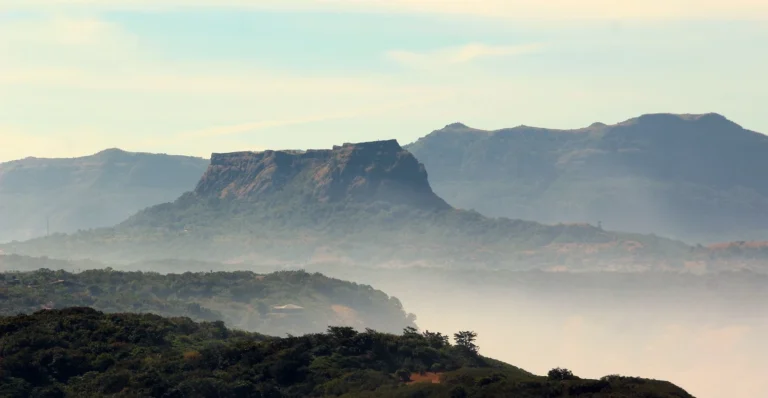
Korigad Fort is a hill fortress situated in the Lonavala region of Pune district, standing at an elevation of approximately 923 meters (3,028 feet) above sea level. It rises about 200 meters higher than its neighboring valleys, providing a dramatic vantage point.
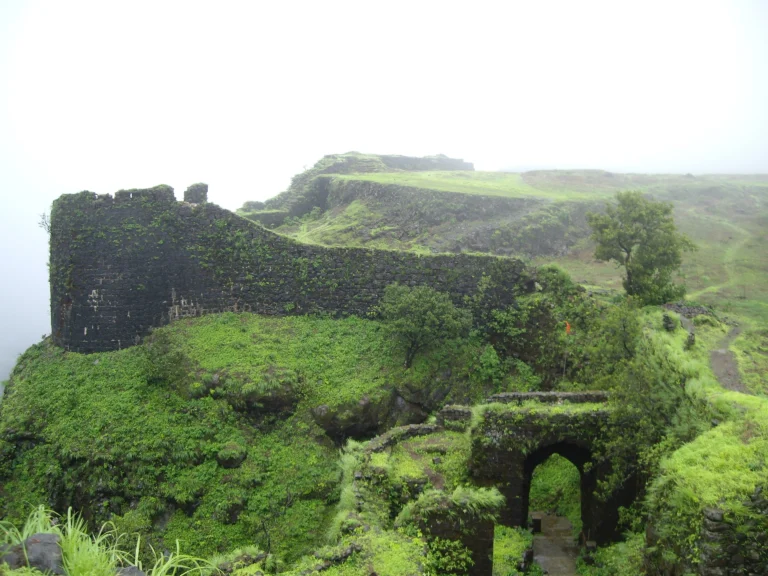
This one day trek near Mumbai is famous for its broad, flat top—so large that it houses two permanent lakes. Unlike many other forts that have fallen into total ruin, Korigad’s 2 km long perimeter wall is almost entirely intact, allowing trekkers to walk the full circumference of the fort.
2. Why This Trek Is Famous
Korigad is a staple of Mumbai trek places for several unique reasons:
- Intact Fortification: It is one of the rare forts where you can walk along the entire 2 km boundary wall.
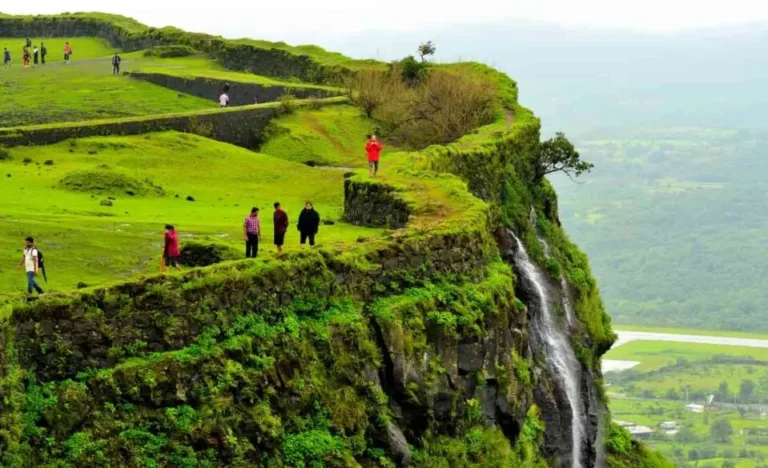
- Waterfall Steps: During the monsoon, the stone steps leading to the top turn into a gentle, cascading waterfall.
- Twin Lakes: Two beautiful lakes (Ganesh Pund and others) are located right on the plateau, which remain filled with water even after the monsoon.
- Aamby Valley Views: The fort offers a “bird’s-eye view” of the luxurious Aamby Valley City and its private airport.
3. History & Background
The exact origins of Korigad are unknown, but it is believed to date back to before 1500 AD. In 1657, Chhatrapati Shivaji Maharaj captured Korigad along with other strategic forts like Lohagad, Visapur, Tung, and Tikona to incorporate them into the Maratha Empire.
The fort saw significant action in 1818 during the Third Anglo-Maratha War. British forces under Colonel Prother laid siege to the fort but were initially unsuccessful. They eventually captured it only after a “lucky” cannonball strike hit the fort’s ammunition magazine, causing a massive explosion that forced the Maratha garrison to surrender.
4. Trek Route & Trail Details
The trek primarily starts from the base village of Peth Shahpur.
- Initial Trail: The walk begins with a flat, easy path through a small jungle patch for about 15–20 minutes.
- The Steps: The main ascent consists of approximately 500 to 600 stone steps. These are wide and well-constructed, making the climb straightforward.
- Alternative Route: There is a steeper, more rugged path from Ambavne village, which is preferred by more experienced trekkers seeking a challenge.
5. Trek Difficulty Level
- Difficulty: Easy.
- Suitability: Excellent for beginners, children, senior citizens with basic fitness, and solo female travelers.
- Physical Fitness: If you can climb 5–6 flights of stairs without becoming breathless, you can easily complete this trek.
6. Trek Distance & Duration
- Total Distance: Roughly 2–3 km (one way).
- Time to Reach the Top: 45 minutes to 1.5 hours.
- Return Time: 45 minutes to 1 hour.
7. How to Reach the Trek Base
Korigad is approximately 105 km from Mumbai.
- By Car: Drive via the Mumbai-Pune Expressway to Lonavala, then follow the road toward Aamby Valley City to reach Peth Shahpur.
- By Train: Take a train to Lonavala Station. From there, hire a private jeep or take a local state transport (ST) bus heading toward Aamby Valley/Peth Shahpur.
- By Bus: Direct buses to Lonavala are available from Dadar, Borivali, and Thane.
8. Entry Fees, Permissions & Timings
- Entry Fees: There is generally no formal entry fee for the fort.
- Permissions: While some sources mention obtaining forest department permission, it is typically accessible to the public during daylight hours.
- Timings: Gates are generally open from sunrise to sunset.
9. Best Time to Do This Trek
- Monsoon (June to September): The most popular time, when the steps turn into waterfalls and the plateau is covered in mist and wildflowers.
- Winter (October to February): Best for clear views and camping on the plateau.
- Summer (March to May): Only recommended for early morning or night treks to avoid the intense afternoon heat.
10. Things to See During the Trek
- Korai Devi Temple: A recently renovated temple dedicated to the fort’s guardian deity.
- Laxmi Toph (Cannon): The largest of the six cannons on the fort, located near the temple.
- Ganesh Darwaja: The main entrance gate which is still in great condition.
- Ancient Caves: Small caves located along the steps and near the lakes, some containing idols of Lord Vishnu.
11. Things to Do Near the Trek Location
- Pawna Lake: A popular camping spot located a short drive away.
- Lion’s Point & Tiger Point: Famous scenic viewpoints on the way from Lonavala.
- Bhaja & Karla Caves: Ancient Buddhist rock-cut caves near Malavli.
12. Safety Risks & Dangerous Areas
- Slippery Steps: In the monsoon, the water-covered steps can be very slick; use footwear with a strong grip.
- High Wind Pressure: Near the bastions, the wind force can be unexpectedly strong; keep a safe distance from the edges.
- Monkeys: Be cautious with food, as local monkeys may try to snatch bags.
13. Safety Precautions
- Stay on the Marked Path: Follow the white arrows (रो marks) to stay on the correct route.
- Avoid Over-Exposed Selfies: The edges of the 2 km wall are mostly unguarded; do not stand on the very edge for photos.
- Start Early: Starting by 8:00 or 9:00 AM helps you avoid the largest crowds and the midday sun.
14. Things to Carry for the Trek
- Water: At least 2–3 liters per person (no shops on top).
- Footwear: Sturdy trekking shoes with rubber grips.
- Food: Dry snacks, energy bars, and a packed lunch.
- Protection: Raincoat/poncho for monsoon or cap/sunscreen for winter/summer.
- Torch: Essential for night treks or if you plan to explore the caves.
15. Travel & Trekking Tips
- Avoid Weekends: Korigad is extremely popular; visit on a weekday or a Friday to enjoy the serenity.
- Local Food: Support the villagers at Peth Shahpur by having a local Maharashtrian “Thali” (lunch) after your descent.
- Zero Plastic Policy: Please carry your trash back to the base village to keep this heritage site clean.
Forget the hassle and choose CABTAN—Mumbai’s most punctual and affordable cab service. Our trained drivers ensure a safe, reliable, and completely worry-free journey. Fill out the form below to book your ride now.